
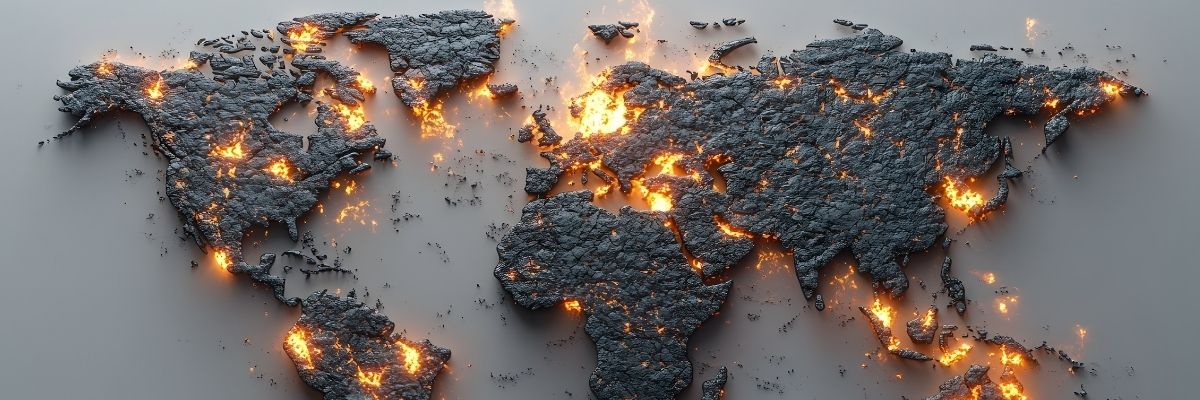
In an increasingly interconnected world, global institutions like the United Nations, the World Bank, and the International Monetary Fund play a pivotal role in addressing shared challenges. From climate change and pandemics to economic crises and humanitarian disasters, these organizations are designed to foster cooperation and provide solutions that transcend national borders. But in an era marked by rising nationalism, geopolitical tensions, and complex global problems, the question arises: Are these institutions still up to the task? Are they effectively serving their intended purpose, or are they struggling to remain relevant in a rapidly changing world?
The Promise of Global Cooperation: What Were These Institutions Supposed to Do?
Global institutions emerged from the ashes of World War II, driven by a collective desire to prevent future conflicts and foster international collaboration. The underlying principle was simple: by working together, nations could overcome challenges that no single country could tackle alone. The United Nations (UN), for example, was envisioned as a forum for diplomacy and conflict resolution, promoting peace and security worldwide. The World Bank and the International Monetary Fund (IMF) were established to promote economic development and stability, providing financial assistance and policy advice to countries in need.
These institutions were founded on the belief that multilateralism, the practice of coordinating national policies in multilateral forums, could create a more stable and prosperous world. They were designed to be impartial arbiters, providing a neutral platform for countries to negotiate and reach agreements. They also aimed to set international standards and norms, ensuring a level playing field for all.
Cracks in the Foundation: Why Are People Questioning Their Effectiveness?
Despite their noble intentions, global institutions have faced increasing criticism in recent years. Several factors have contributed to this skepticism, including:
- Lack of Representation: Many argue that these institutions are dominated by Western powers, particularly the United States and Europe. Developing countries often feel their voices are not adequately heard, and their concerns are not properly addressed. This imbalance of power can lead to policies that favor the interests of wealthier nations at the expense of poorer ones.
- Bureaucracy and Inefficiency: Global institutions are often criticized for being slow, bureaucratic, and inefficient. Decision-making processes can be cumbersome and time-consuming, hindering their ability to respond quickly to crises. This can lead to frustration among member states and undermine their confidence in the institution’s ability to deliver results.
- Enforcement Challenges: Even when global institutions reach agreements or set standards, enforcing them can be difficult. Many countries are reluctant to cede sovereignty to international bodies, and there is often a lack of effective mechanisms to hold them accountable. This can lead to a situation where rules are ignored or selectively enforced, undermining the credibility of the institution.
- Geopolitical Tensions: The rise of nationalism and geopolitical competition has made it more difficult for global institutions to function effectively. Major powers are increasingly pursuing their own interests, often at the expense of international cooperation. This can lead to gridlock and paralysis, preventing these institutions from addressing critical global challenges.
- The Rise of Non-State Actors: Global institutions were primarily designed to deal with nation-states. However, the rise of powerful non-state actors, such as multinational corporations, NGOs, and even terrorist groups, has created new challenges. These actors often operate outside the control of global institutions, and their actions can have significant global consequences.
Are They Still Relevant? Where Global Institutions Are Making a Difference
Despite the criticisms, it’s important to acknowledge that global institutions have also achieved significant successes. They have played a crucial role in:
- Poverty Reduction: The World Bank and the IMF have provided billions of dollars in financial assistance to developing countries, helping to reduce poverty and improve living standards. Their programs have supported education, healthcare, and infrastructure development, contributing to long-term economic growth.
- Disease Eradication: The World Health Organization (WHO) has been instrumental in eradicating diseases like smallpox and polio. It has also played a crucial role in coordinating global responses to pandemics like HIV/AIDS and COVID-19.
- Conflict Resolution: The UN has deployed peacekeeping forces to conflict zones around the world, helping to maintain peace and security. It has also facilitated negotiations between warring parties, preventing conflicts from escalating.
- Humanitarian Assistance: Global institutions provide vital humanitarian assistance to people affected by natural disasters and armed conflicts. They coordinate the delivery of food, shelter, and medical care to those in need.
- Setting International Standards: Global institutions have played a crucial role in setting international standards and norms in areas such as trade, human rights, and environmental protection. These standards help to create a level playing field and promote global cooperation. The World Trade Organization (WTO) is a good example.
These successes demonstrate that global institutions can be effective when they are well-resourced, well-managed, and supported by member states. They provide a valuable platform for international cooperation and can make a real difference in addressing global challenges.
The Need for Reform: How Can We Make Global Institutions More Effective?
If global institutions are to remain relevant and effective in the 21st century, they need to undergo significant reforms. Some key areas for reform include:
- Improving Representation: Global institutions need to become more representative of the world’s population. This means giving developing countries a greater voice in decision-making processes and ensuring that their concerns are adequately addressed. Reforms to the UN Security Council, for example, have been discussed for decades.
- Increasing Transparency and Accountability: Global institutions need to be more transparent and accountable to their member states and the public. This means providing more information about their activities and ensuring that their decisions are subject to greater scrutiny.
- Strengthening Enforcement Mechanisms: Global institutions need to develop more effective mechanisms for enforcing their rules and standards. This may involve imposing sanctions on countries that violate international law or creating independent bodies to investigate alleged abuses.
- Adapting to New Challenges: Global institutions need to be more flexible and adaptable to new challenges. This means developing new strategies for dealing with non-state actors and addressing emerging threats like climate change and cybercrime.
- Promoting Multilateralism: Global institutions need to actively promote multilateralism and encourage countries to work together to address shared challenges. This means fostering dialogue, building trust, and finding common ground.
The Future of Global Governance: What Does It Look Like?
The future of global governance is uncertain, but it is clear that global institutions will continue to play a vital role in addressing shared challenges. However, their effectiveness will depend on their ability to adapt to a changing world and address the criticisms leveled against them. A more inclusive, transparent, and accountable system of global governance is essential for ensuring a more peaceful, prosperous, and sustainable future for all. Perhaps a system that involves a more distributed network of institutions, each specializing in specific areas, could be more effective than the current centralized model.
Frequently Asked Questions
- What is a global institution? A global institution is an international organization that works across national borders to address global issues. Examples include the UN, World Bank, and WHO.
- Why are global institutions important? They provide a platform for countries to cooperate on issues that affect everyone, such as climate change, pandemics, and economic stability.
- What are the main criticisms of global institutions? Common criticisms include lack of representation, bureaucracy, and difficulties in enforcing rules.
- How can global institutions be improved? Reforms could focus on increasing representation, transparency, and accountability.
- Are global institutions becoming obsolete? While facing challenges, they remain crucial for addressing global issues, but reform is needed.
In short, while global institutions face undeniable challenges and criticisms, they remain essential for addressing shared global problems. By undergoing necessary reforms and adapting to the changing world, they can continue to play a crucial role in fostering international cooperation and building a more sustainable future.